SafePal S1
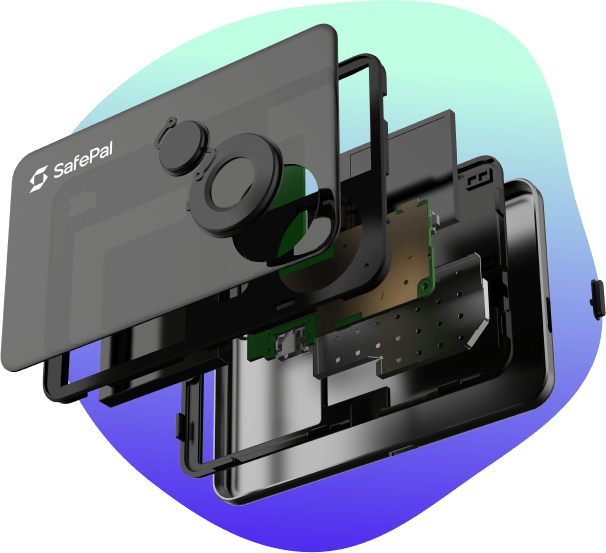
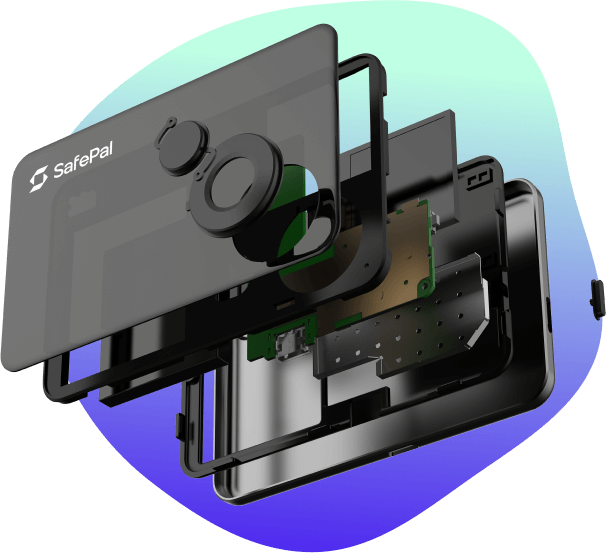
The SafePal S1 is a 100% offline cold storage hardware wallet that uses an air-gapped QR-code signing mechanism.[source]
What you should know about SafePal S1
- 100% Air-Gapped Security: Operates entirely via QR codes with no Bluetooth, Wi-Fi, NFC, or USB connections, keeping your private keys isolated from online threats.
- EAL 5+ Secure Element: Features a financial-grade chip and a self-destruct mechanism that triggers if it detects physical tampering or forceful entry.
- Multi-Chain & DeFi Support: Manages 30,000+ assets across 100+ blockchains and integrates directly with the SafePal App for DApps, swaps, and NFT management.
- Ultra-Portable & Budget-Friendly: A credit-card-sized hardware wallet that offers premium security features at a significantly lower price point than many competitors.
Pros & Cons
Strengths
- + 100% Air-gapped (No Bluetooth/WiFi/USB)
- + High-security EAL6+ chip
- + Transitioned to Open Source
- + Affordable pricing
- + Unlimited asset storage
Weaknesses
- - Plastic build (Standard S1)
- - Requires mobile app for most functions
- - No dedicated desktop app
Facts about the SafePal S1
SafePal S1 FAQ
How does the air-gapped signing mechanism of the SafePal S1 differ from traditional hardware wallets?
Unlike traditional hardware wallets that require USB or Bluetooth connections to transmit data, the SafePal S1 relies entirely on an air-gapped QR code communication method. To sign a transaction, the companion app generates a QR code representing the unsigned transaction. You scan this with the SafePal S1's built-in camera, authorize it on the device, and the device then displays a dynamic QR code containing the signed signature, which you scan back with your smartphone. This ensures the private keys never physically interface with an internet-connected device.
Can the SafePal S1 recover a seed phrase generated by a Ledger or Trezor device using the BIP39 standard?
Yes, the SafePal S1 is fully compliant with the BIP39 and BIP44 standards. This means you can import any 12, 18, or 24-word recovery phrase generated by other standard-compliant hardware or software wallets, such as Ledger or Trezor, to regain access to your cryptographic assets directly on the SafePal device.
What is the self-destruct mechanism on the SafePal S1 and what triggers it?
The SafePal S1 features a built-in self-destruct mechanism designed to prevent physical tampering and side-channel attacks. The device is embedded with multiple sensors that detect if the hardware casing is being forcibly opened or if anomalous voltage changes occur. If a physical breach is detected, the internal secure element will instantly wipe all stored data, including the private keys and PIN, permanently bricking the compromised hardware while leaving your funds safely recoverable via your backup seed phrase.
How do firmware updates work on a completely air-gapped device like the SafePal S1?
Because the device has no direct network connectivity, firmware updates are performed manually via a computer. You must download the encrypted firmware file from the official SafePal website to your computer, connect the SafePal S1 via a USB cable (which only permits power and specific firmware transfer data, not key extraction), and execute the upgrade. The device authenticates the firmware signature before installation to prevent malicious flashing.
Which blockchain networks and tokens are natively supported by the SafePal S1 without needing third-party integrations?
The SafePal S1 natively supports over 100 different blockchains and their associated tokens, including major layer-1 networks like Bitcoin, Ethereum, Solana, and Binance Smart Chain, as well as various layer-2 scaling solutions. Because the blockchain logic is heavily integrated into the SafePal app, adding support for new networks usually only requires an update to the mobile app rather than requiring you to install individual network apps onto the hardware device itself.
Why buy the SafePal S1
The SafePal S1 stands out as one of the most affordable fully air-gapped hardware wallets on the market. Unlike the Ledger Nano S Plus or Trezor Safe 3, which require USB or Bluetooth connections, the S1 operates exclusively via encrypted QR codes, ensuring it never touches a networked device. It also features a built-in camera and a larger color screen for easier transaction verification compared to the small monochrome displays of entry-level Ledger and Trezor models.
Beyond its connection security, the SafePal S1 offers a self-destruct mechanism that triggers if it detects a physical hardware attack, a high-end security feature rarely found in wallets at this price point. While its build is more plasticky than its premium competitors, it provides a significantly more modern, mobile-first DeFi experience with native support for thousands of tokens and multiple blockchains without the connectivity risks of its peers.
SafePal S1 FAQ
How does the SafePal S1 achieve a completely air-gapped environment without relying on USB, Bluetooth, or NFC connections?
The SafePal S1 relies exclusively on an integrated camera and display to facilitate communication via dynamic QR codes. By scanning these QR codes back and forth with the companion SafePal mobile app, it ensures that your private keys remain strictly isolated from internet-connected devices. This design eliminates the remote attack vectors typically associated with wired or wireless transmission protocols.
What specific role does the EAL5+ Secure Element play in defending against sophisticated physical extraction techniques?
The embedded EAL5+ financial-grade secure element acts as an isolated microcomputer dedicated entirely to cryptographic operations. It is engineered to thwart advanced physical hardware attacks, side-channel analysis, and fault injection. If the device detects malicious physical tampering or brute-force attempts, the secure element triggers an automatic self-destruct mechanism that irreversibly wipes all stored private data, securing your assets even if the hardware is stolen.
Is it possible to manage the SafePal S1 via a desktop interface, or is it strictly limited to mobile devices?
The SafePal S1 is engineered specifically for a mobile-first ecosystem and does not offer an official desktop application. To manage your digital assets, initiate transactions, or interact with smart contracts, you must pair the hardware wallet with the SafePal App on an iOS or Android smartphone. The physical device is utilized solely for securely authorizing and signing transactions offline via the QR code interface.
How does the wallet accommodate extensive multi-chain asset portfolios without the need to install individual coin applications?
Unlike traditional hardware wallets that are often constrained by limited storage and require users to continuously install and uninstall specialized applications for different blockchains, the SafePal S1 utilizes a unified firmware architecture. This approach enables native, simultaneous support for over 100 different blockchains and an unlimited capacity for tokens, drastically streamlining the management of highly diversified cryptocurrency portfolios without storage bottlenecks.
In what ways does the integration with the SafePal mobile application streamline advanced decentralized finance (DeFi) operations?
The companion SafePal mobile application features a robust built-in Web3 dApp browser, a decentralized cross-chain exchange aggregator, and native bridging protocols. This deep integration allows users to seamlessly route liquidity across disparate blockchain networks, participate in complex yield farming strategies, and execute trades directly on decentralized exchanges. Crucially, all these advanced DeFi operations are conducted while maintaining the uncompromising cold storage security guaranteed by the air-gapped hardware device.